Art Education
The Arte Continua Associationhas developed an art education program for adults and children in collaboration with the cultural associations LaGorà, Active Cultures, and Rollercoaster, with the aim of discovering and promoting contemporary art in the Val d’Elsa region.
The goal is to chart a course toward building a connection between communities, educational institutions, and works of art, so that everyone—from young children to adults—will be able to recognize and preserve the value of that heritage. For this reason, we have chosen to actively involve teachers and students, convinced that knowledge of one’s local area and its artistic heritage—both past and contemporary—is the driving force behind the development of an informed, sensitive, respectful, and engaged citizenry.

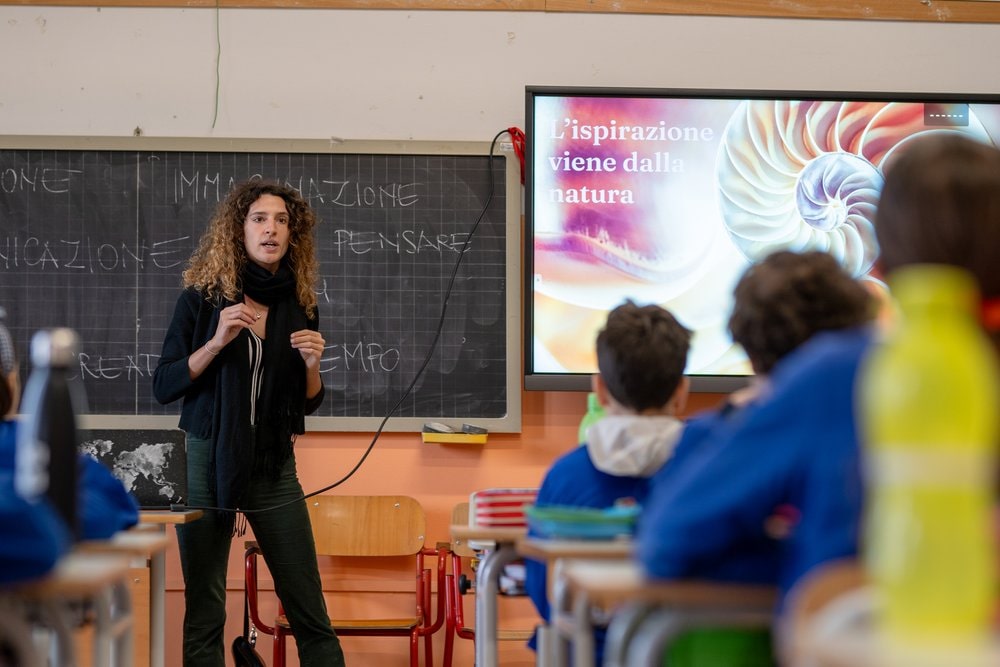
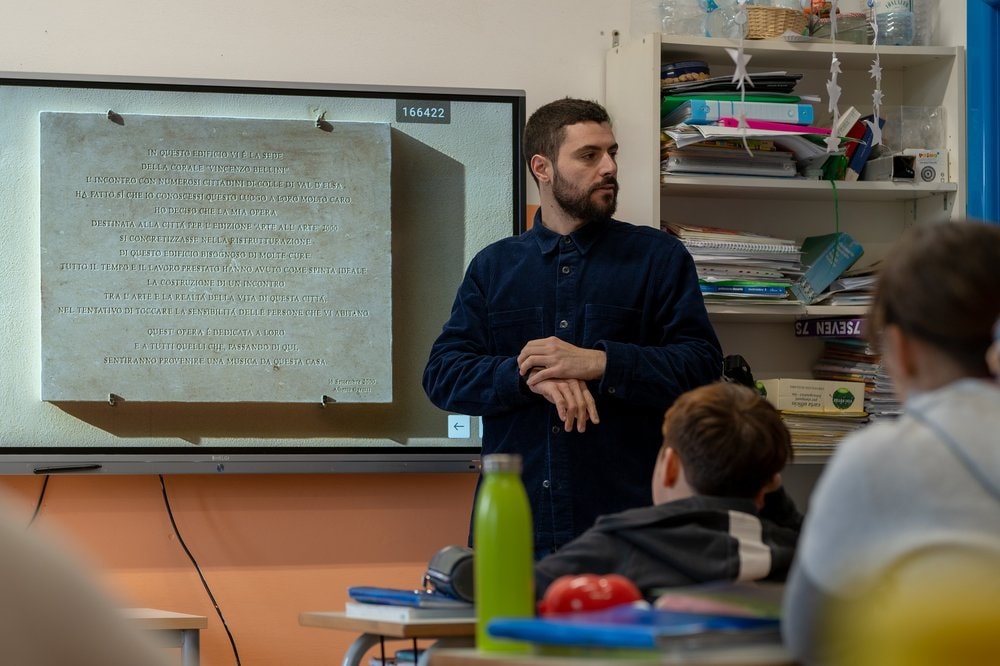
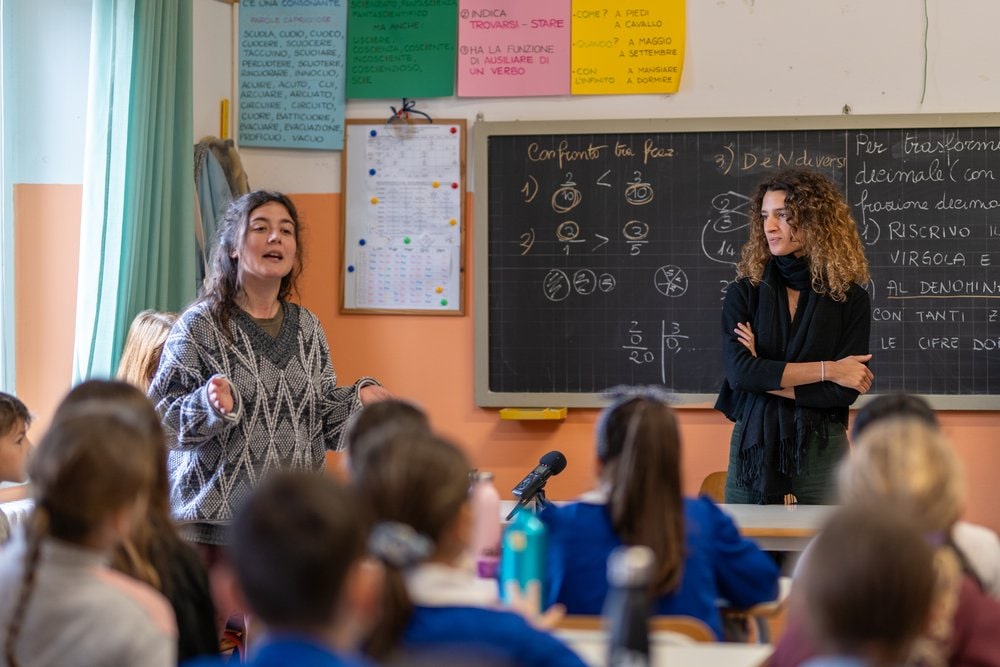
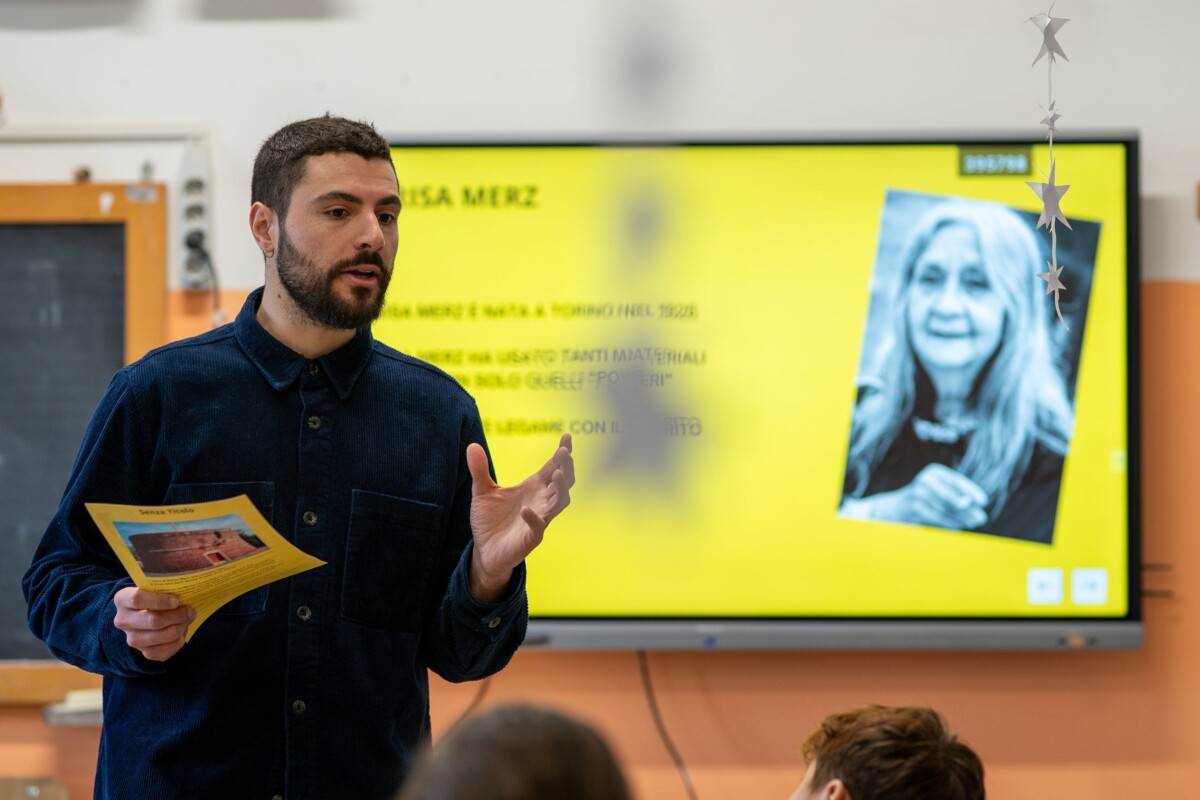
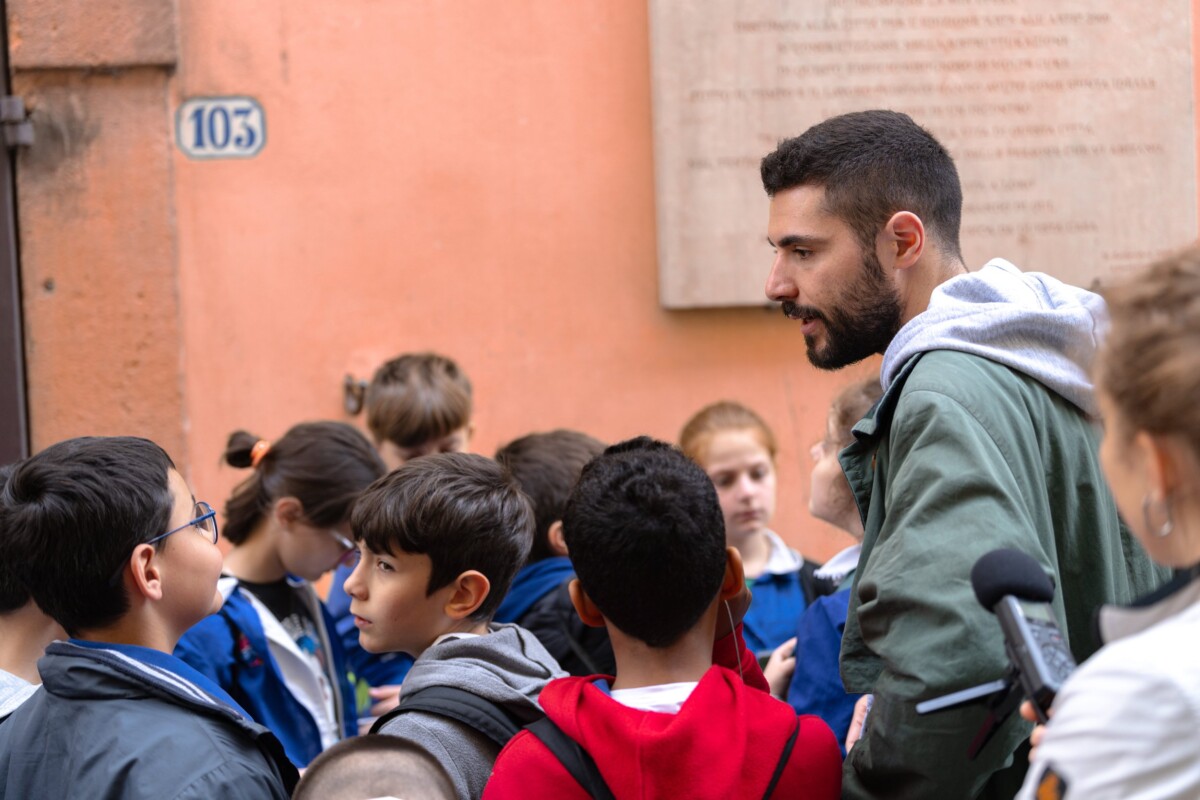
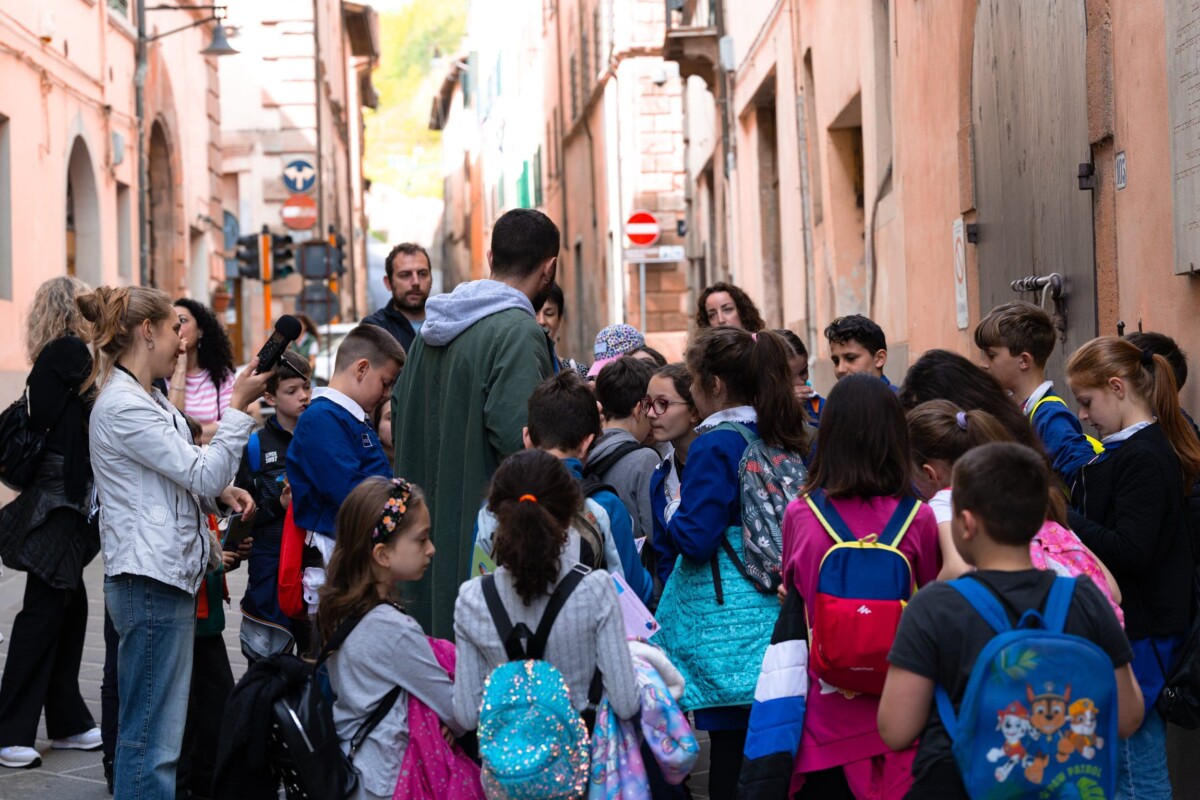
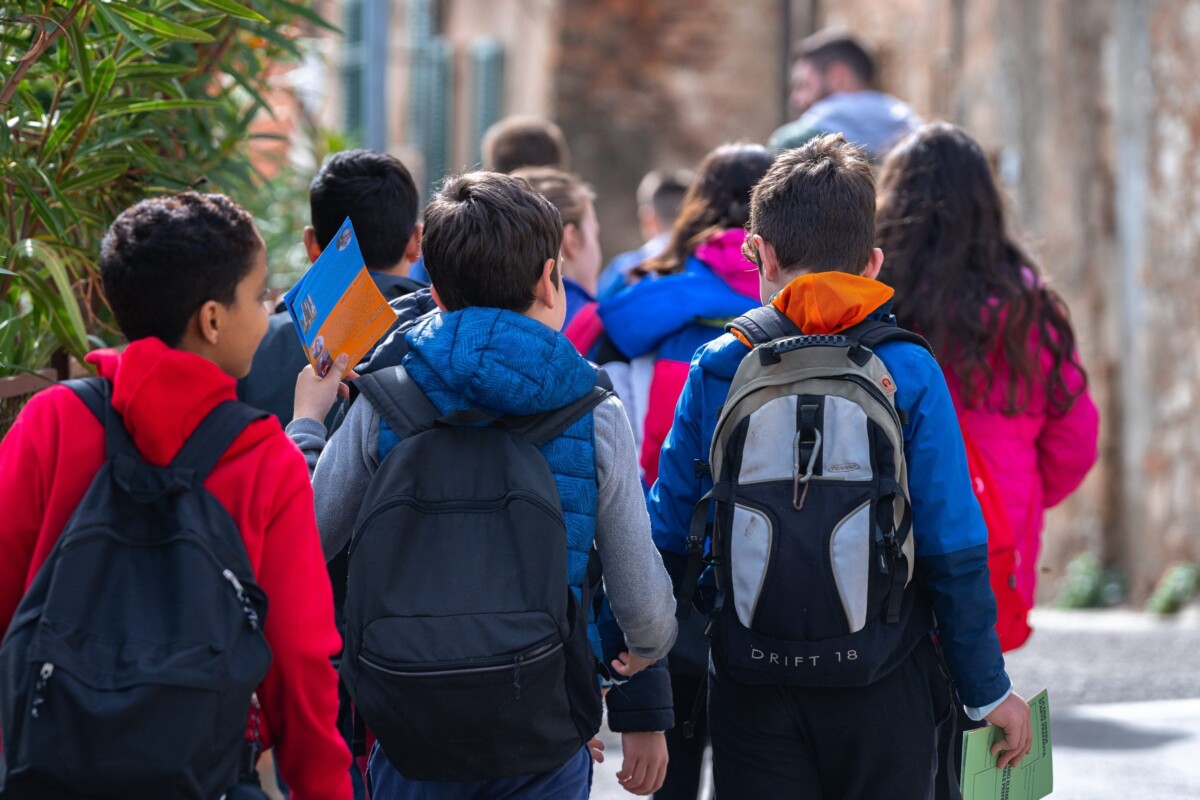
The workshops, organized in collaboration with schools at the municipalities of San Gimignano, Colle di Val d’Elsa, and Poggibonsi, allowed students—through guided outdoor tours and in-depth classroom sessions—to engage with the artists’ work and develop an appreciation for culture and respect for the environment.
The educational programs have, in fact, led the children to discover the works of Antony Gormley, Kiki Smith, Mimmo Paladino, Anish Kapoor, Ilya Kabakov, Sol LeWitt, Joseph Kosuth, Alberto Garutti, and Cai Guo-Qiang, which are scattered throughout the Val d’Elsa region.
Projects in Art Education are part of the mission of the Associazione Arte Continua, which for years has devoted particular attention to the interconnection between the social and cultural spheres, working to promote initiatives that enable the public to recognize, appreciate, and value the region’s artistic and natural heritage.





LaGorà Association
The social promotion association LaGorà was founded in Colle di Val d’Elsa in February 2020 with the goal of creating an intergenerational social network and promoting the Colle di Val d’Elsa area from a natural, scenic, historical, artistic, and human perspective. The name is derived from the combination of two concepts: the agora (Greek: ἀγορά, from ἀγείρω = I gather, I assemble), a place of meeting and exchange, and the gora, referring to the artificial canals (dating back to the 13th century) that, by channeling the waters of the Elsa River, shaped the territory and fostered the town’s development with its factories, mills, paper mills, and ironworks.
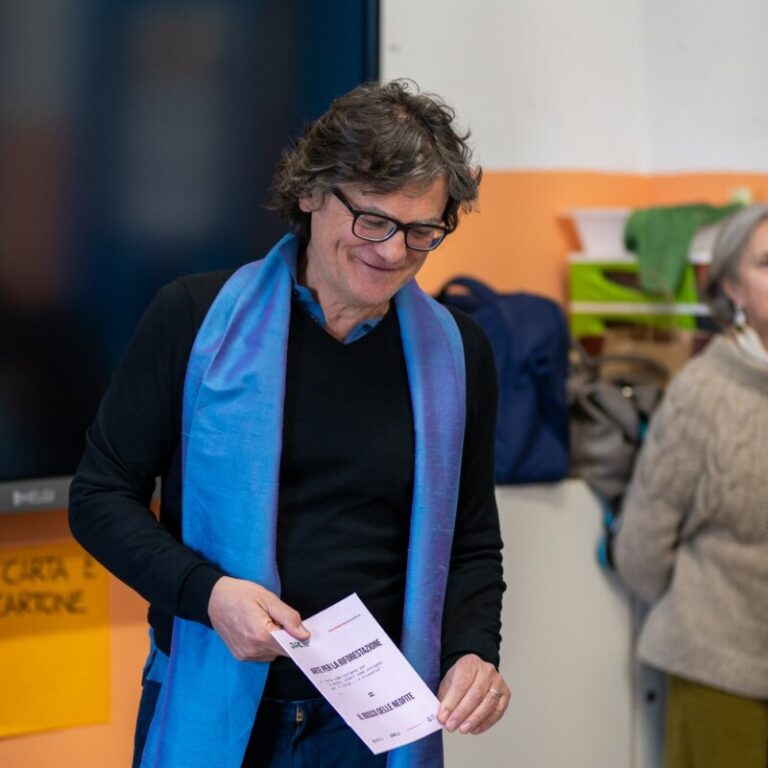


Classroom Lessons Photo by Cristiano Mascagni © 2024 LaGorà. All rights reserved.
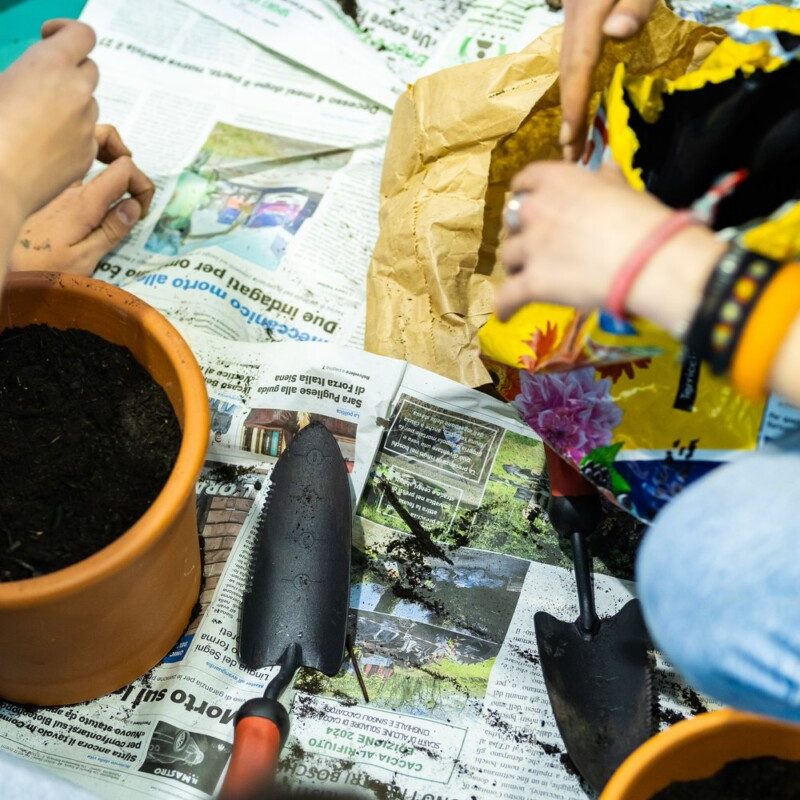


Classroom Lessons, Photo by Cristiano Mascagni © 2024 LaGorà. All rights reserved.


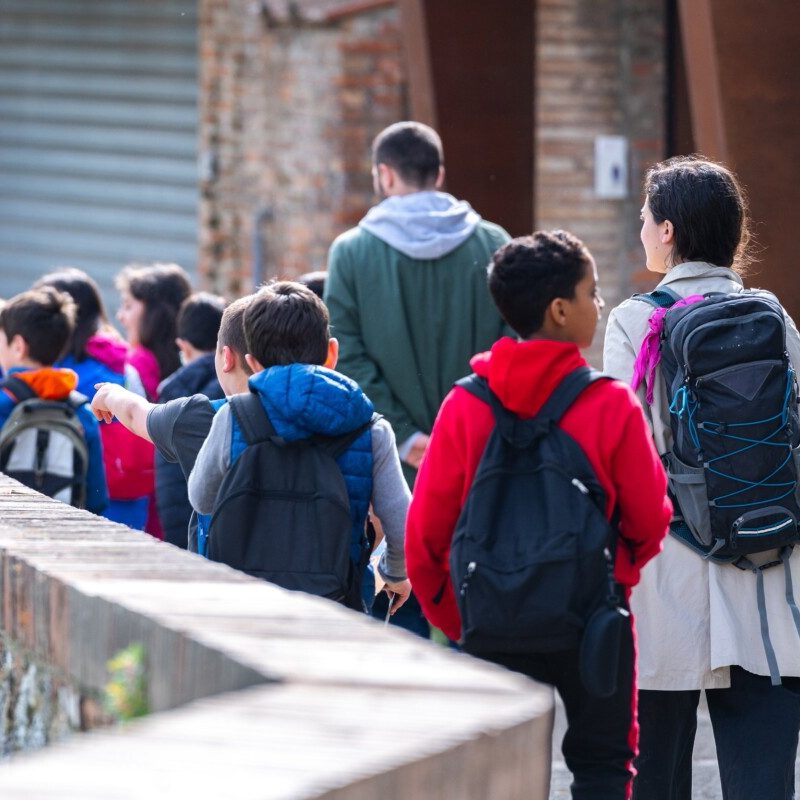

A Visit to Colle di Val d’Elsa, Photo by Cristiano Mascagni © 2024 LaGorà. All rights reserved.
Active Cultures Association
The Associazione Active Cultures was founded in December 2009. Based in San Gimignano, it is dedicated exclusively to promoting art and culture in all their forms. Its mission and activities are inspired by the principles of equal opportunity between men and women and respect for the inviolable rights of the individual. It organizes events, workshops, and educational programs on art and contemporary artistic expressions, as well as educational initiatives on UNESCO and public art, aimed at both young people and adults throughout the Tuscany region, in collaboration with public and private institutions. It has established numerous PCTO agreements with the Alessandro Volta High School in Colle Val d’Elsa; the “Duccio di Buoninsegna” Art High School in Siena; and the “Roncalli” High School in Poggibonsi.


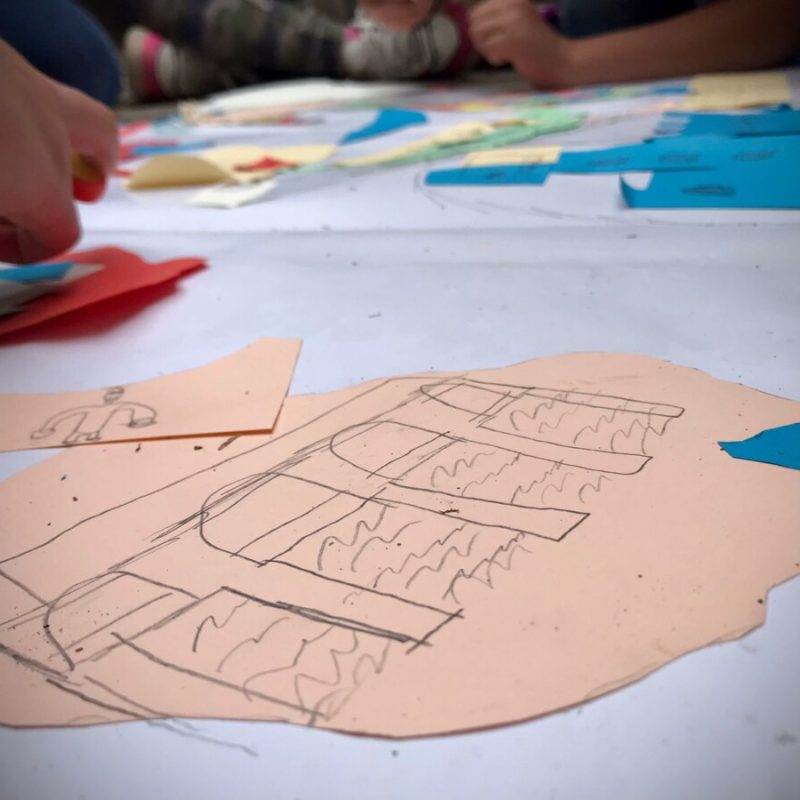


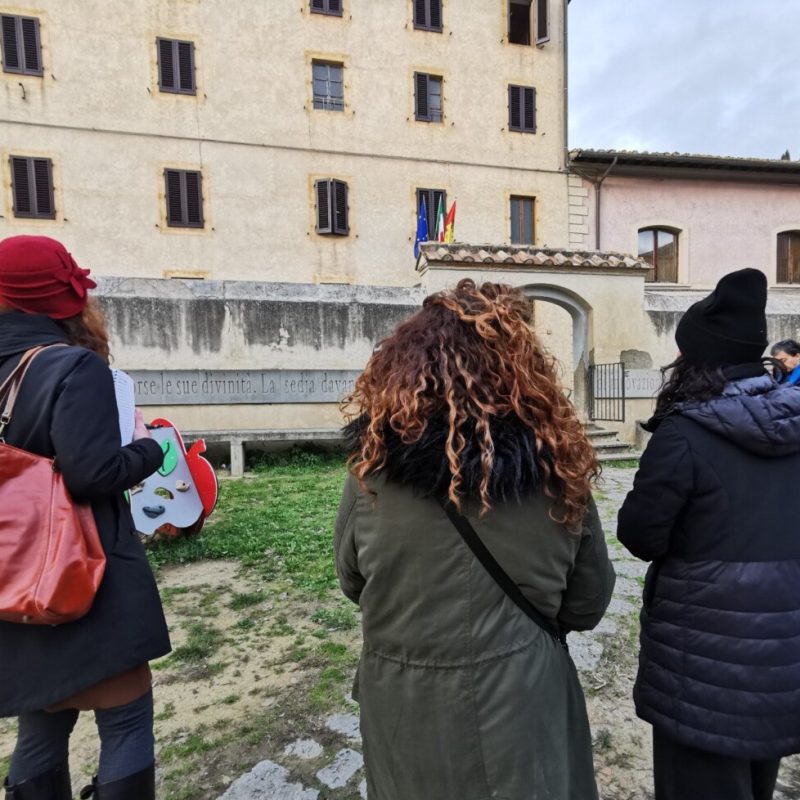

School Field Trips © 2024 Culture Attive. All rights reserved.
Ottovolante Association
The Ottovolante Association, based at the Fortress of Staggia in Poggibonsi, has been active for over twenty years in the field of art education, promoting educational projects that blend contemporary art, participatory architecture, and active citizenship. Founded and directed by Donatella Bagnoli, the association is recognized for its ability to transform historic sites into dynamic educational spaces, engaging children, families, and local communities in experiential and creative programs.
Among the most significant projects is “Fai Spazio Prendi Posto”, an art education program centered on the works of artists such as Antony Gormley, Mimmo Paladino, and Kiki Smith, created as part of the project Art to Art in the Poggibonsi area. This project includes classroom workshops, field trips, performances, and installations, with the goal of fostering a sense of belonging among the participants and the city.
The Ottovolante Association also runs the Family Education Center inside the Rocca di Staggia, offering events and workshops for children and parents, and providing a unique way to learn about art and local heritage.
MAKE SPACE, TAKE YOUR SEAT
Making Space, Taking Place
, Antony Gormley
Course in ART EDUCATION
curated by the Ottovolante Association, a project by Donatella Bagnoli. Contributors: Sergio Pampaloni, Rossella Pelagotti, Mirella Salvadori
Focusing on the works of Antony Gormley, Mimmo Paladino, and Kiki Smith
ART TO ART Project – Poggibonsi area
Photos/videos by Mirco Frilli (DIGITALMODI) and Rossella Pelagotti
Click on the images to view the video documentation of the workshop
Classroom workshops
Field trips
Activities—interpretations, performances, and installations centered on works of art
Workshop meeting between the students and residents of the shelter
Screening of the project carried out with the parents
Location: Piazza del Comune (Piazza Cavour)
Piazza del Comune opens up before us, a spectacular sloping square that embodies the Tuscan philosophy: “to make heaven and earth one,” as Curzio Malaparte put it. The bell tower touches the sky; on the roof of the Collegiate Church, statues are surrounded by blue. Would you like to go down?
Antony Gormley’sfemale figure, a silent passerby, a descending cloud—like a shadow, the figure gently blends into the stones, is reflected in the shop windows, and dissolves into light and air.
Installed in the square in 2004–05, our installation is inspired by the title of the 9th edition of Art to Art: THE SHAPE OF CLOUDS.
White paper clouds bring the space to life. We are the wind that transforms them; they fly and settle. WHITE CLOUDS AGAINST A SERENE STONE SKY.
SHADOWS steal the clouds; we play with them, BETWEEN EARTH AND SKY; I no longer know if I am a cloud, a shadow, or a stone.
MIRRORS, like puddles, capture the clouds; thanks to the reflection, I carry a friend, a piece of the city, a cloud in my heart.
I lie down on this STONE; they’re all different. I TAKE MY PLACE; it resembles me and holds me within it—we belong to each other. I am part of the city; the city is within me.
Location: train station / Platform 2, Piazza Mazzini
The man gazes into the distance.
Beyond his gaze, another world. Sky.
Clouds race northward, an invitation to travel.
Railroad tracks stretching into infinity.
Yellow lines, like trajectories of light, fade into the horizon.
Antony Gormley ’s human figure seems to dissolve into trails of light: it glows with immensity.
Yellow threads, relational weaves, hold onto thoughts and moods. The gaze, like a mirror, captures trains, people, and clouds, only to shatter into a kaleidoscope.
Location: Medici Fortress – Cassero
The layout of the Renaissance fortress, commissioned by Lorenzo the Magnificent, takes the shape of a human figure. Inspired by the plans and drawings of Francesco Di Giorgio Martini, it resembles a reclining man, open to embracing the sky within himself.
By day, clouds drift across it; by night, it serves as a prime observatory for the stars. Its pentagonal shape evokes a man who transforms himself into a five-pointed star to guide the way. With a shining crown atop his head—the star’s point—he becomes the prow of a ship ready to set sail across the sea of the firmament.
High above, at the stern of an imaginary sailing ship, thefemale figure—a work by Antony Gormley— gazesinto the distance, melting with nostalgia, evaporating like a cloud, expanding into a flock of birds in flight.
Entering the Fortress through a narrow, dark passageway— venturing into a human intestine or an architectural labyrinth—you reach a herringbone dome, a human belly, and a rotating galaxy: the solar plexus. Slowly, you emerge into the light, and each person experiences their own personal RENAISSANCE.
On the paper —whether it be a set designer’s sketch, a map, or a rug—the journey unfolds as we unroll a thread that serves as both a geographical path and a celestial map. Each of us connects objects, images, books, and bodies with threads of meaning, bringing our own stories to life. We each trace the outline of the other; our silhouettes are constellations, clouds, and maps of celestial cities.
Location: Medici Fortress – Cassero
From the FONTE DELLE FATE, immersed in the mother’s womb, coming into the world in the RENAISSANCE FORTRESS, becoming the sky, becoming a cloud.
Location: Medici Fortress – Cassero
Upon entering the “Cassero”—a fortified structure shaped like a human figure and reflecting the image of the universe—everyone can
experience their own Renaissance. As you passfrom the darkness of a tunnel intothe intensesunlight of the courtyard,
the fortress opens wide to the sky. It is an invitation to expand oneself, freely exploring one’s own energy.
Art accompanies us as we discover spaces and places, but also as we come to know ourselves.
Kiki Smith’s work “Blue Girl” guides us toward a different perspective.
Turning our gazeinward, looking within ourselves, to create a relational understandingthat
requires intimacy. Sunlight becomes as intimate as moonlight.
Location: Politeama Theater, Piazza Rosselli
Poggibonsi: The town and its residents share a history of destruction and self-reconstruction.
Antony Gormley ’s human figure at the entrance to the square expresses a painful process of reconstruction—a blend of painful memories and visions of the future.
OUR ROOTS run deep into memory , nourishing a FUTURE CITY. A place where everyone—whether Italian or foreign, resident or passerby—can share the land and grow like a plant. Young people plant their feet and put down roots.
On white paper adhesive tape, they write their grandparents’ memories—a generational exchange, a meeting of stories, lives, and worlds.
Location: The Staggia River
We are WATER. Antony Gormley’s human figure dissolves into reflections on our nature. Man, nature, architecture, the city… they are flowing water. We are tears, drops, rain, a river…
The first place I ever lived was my mother’s body.
She made room inside herself, becoming a BOWL to hold me, a SEA to cradle me. Now I experience the flow of memory and the soul within that space.
Location: HB / sheltered housing
A former hospital, a place of care and welcome; today a library, a space of remembrance, a home of culture.
Next door is the Assisted Living Facility for the Elderly: fragile, precious repositories of emotional, personal, and collective memories.
The “pieces of life” in Antony Gormley’s human figures take on deeper meaning through the structures around them. They become fragments of memories, tales, and stories.
They evoke books with which to build a body that rises like an architecture of words. The book opens like a room; the classroom is a book full of words.
The pages flow like a journey.
My hands are anopen book: a “manography” of a life. The pages take flight, like leaflets in the air.
Sheets/autumnleaves.
Yellow leaves like butterflies welcome our thoughts, our words: a “little pocket book.” The wing-like pages alight on walls, on trees, on the little man…
In encounters with the elderly, the pages blossom with messages : “I don’t know if they are flowers that fly or butterflies that bloom” (free translation from the text by Emily Dickinson).
Location: Fonte delle Fate
The medieval spring, attributed to Balugano da Crema, is known as the FONTE DELLE FATE. This name evokes the enchantment of the place—the mystery of its architecture, the cave, the dragon’s mouth, the dark forest—and underscores the harmonious fusion of art, nature, and architecture.
Mimmo Paladino ’s work , *I DORMIENTI*, permanently installed at the spring (an open-air museum), reveals its magic. The Fairies, lords of dreams, reveal to humans— curled up in a fetal position, immersed in amniotic fluid—another world: the unconscious, darkness… guiding us through the passage of birth, coming into the light, and death.
The Fountain becomes a theater; every action and insight of the girls is accompanied by Brian Eno’s ancestral music, interwoven withthe sound animation created by the boys. But who are the Fairies? They are the healing girls who cradle and care for the Sleepers—orthe Crocodiles of the Fountain—with a magical cloth. A white thread will guide us on our journey to discover the secret of the Fountain.