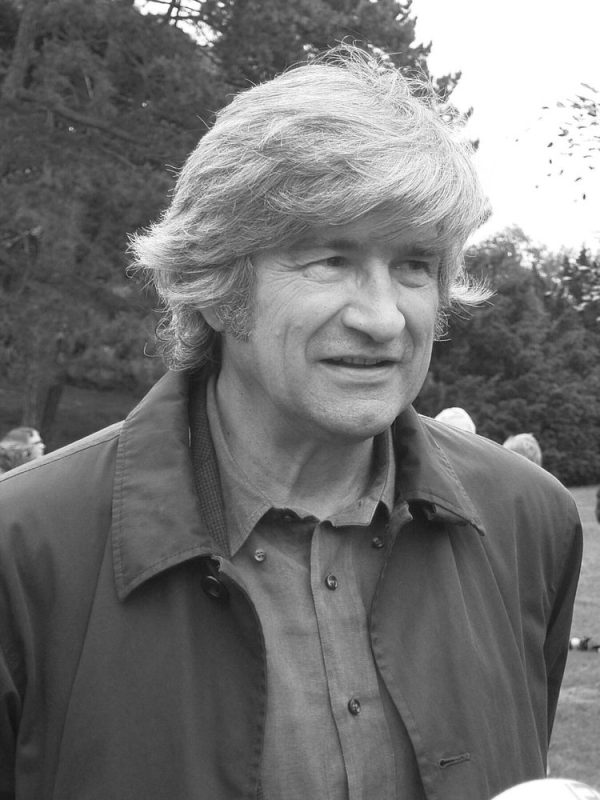
Giuseppe Penone (Garessio, 1947) is one of the leading figures of Arte Povera, renowned for his ability to create a dialogue between art, nature, and time. Through sculptures, installations, and drawings, Penone explores the relationship between humans and the natural environment, using materials such as wood, stone, and metal to create works of great poetic and symbolic power.
In 2008, he participated in Arte Pollino, a project that brought contemporary art to the heart of the Pollino National Park, where he created works in harmony with the natural landscape. In 2021, in collaboration with the Arte Continua Association, he presented the exhibition Trees in verse at the Uffizi Gallery in Florence and installed the sculpture *Abete*atPiazza della Signoria, creating a dialogue between contemporary art and the historic character of the site.
Penone remains a central figure in the international contemporary art scene, capable of combining conceptual depth with an extraordinary sensitivity to the natural world.
He was born in Garessio, in the province of Cuneo, on April 3, 1947. He attended the Academy of Fine Arts in Turin, where he met Giovanni Anselmo and Michelangelo Pistoletto, with whom he joined the Arte Povera movement in 1967. He exhibited for the first time in 1968 at the Deposito d’Arte Presente, presenting works created with unconventional materials such as lead, copper, wax, pitch, and wood, some of which even incorporated the natural forces of the elements (Scala d’acqua: rope, rain, sun).
In the Garessio woods, the artist staged a series of performances aimed at exploring the ways in which humans can interact with and alter nature, for example, by intervening in the growth process of trees (Maritime Alps, 1968).In 1970, he began to explore the relationship between the human body and the external environment—this time in an urban setting—and, in line with trends in body art, created works such as *Rovesciare gli occhi* and *Svolgere la propria pelle* (1971), which identify the human epidermis as the boundary and point of dialogue between the inner “self” and the world. This gave rise to his use of casting and frottage, which allowed the artist to start from an image as automatic as it is unconscious—such as a fingerprint—which he then reinforced through drawing (Pressione, 1974). The idea of contact as a generator of memory and change becomes prominent in the terracotta works from the mid-decade (Vase, 1975; Soffio, 1978), which explore the projection outward of what the body contains or of the skin that covers it; with these works, the artist was featured at dOCUMENTA in Kassel (1972–87) and, in 1978, at the 38th Venice Biennale, which focused precisely on the relationship between art and nature. In some cases, the works take on environmental dimensions, as in the installations created for his solo exhibitions at the Kunstmuseum in Lucerne (1977), the Museum of Modern Art in New York (1981), and the Musée d’art moderne de la Ville de Paris (1984).
The same idea underlies the large bronze trees intended for public spaces: the Münster Well, completed in 1987 for the first edition of “Skulpture Projects”; the Otterloo Beech in the park of the Kröller-Müller Museum (1988); the “Tree of Vowels,” unveiled in 2000 at the Tuileries in Paris; “Elevation” in Rotterdam (2000–01); and “Leaves of Stone” in Rome (2017). Like the skin, fingernails are a sensory element that connects us to the outside world, inspiring a series of large glass sculptures created starting in 1987 and exhibited in 1998 at the Musée Rodin in Paris in contact with various materials. An *Unghia* (Nail), created between 1988 and 1994, is installed outside the I-Land building complex in Nishi-Shinjuku (Tokyo).The process of assimilation between animal, plant, and mineral forms undertaken by the artist is reiterated in *Pelle di cedro* (2002), exhibited in the retrospective organized by the Centre Georges Pompidou in 2004. In 2007, the artist was chosen to represent Italy at the 52nd Venice Biennale (Sculture di linfa) alongside Francesco Vezzoli. In 1989, he was among the finalists for the prestigious Turner Prize.In 2014, he was awarded the Praemium Imperiale for sculpture. In Tokyo that same year, he received what is considered the “Nobel Prize of Art”—the Praemium Imperiale for sculpture—in the presence of Prince Hitachi of Japan, honorary patron of the Japan Art Association.In 2015, he held a solo exhibition, “Spazio di Luce,” at the prestigious Gagosian Gallery in Rome. In 2016, a large-scale installation titled “Foglie di Luce” was among the first works to be included in the permanent collection of the Louvre Abu Dhabi (United Arab Emirates).
In 2017, the Palazzo della Civiltà Italiana in Rome’s EUR district—home to the Fendi fashion house’s offices—hosted the exhibition “Matrice”: a selection of 15 works—some of which had never been shown before—by the Piedmontese sculptor.The exhibition takes its name from the spectacular 2015 work “Matrice,” which dominates one of the galleries: a 30-meter fir log hollowed out along a growth ring and set with a bronze form, immortalizing the flow of life in nature.The exhibition includes: *Ripetere il bosco* (1969–2016), *Soffio di foglie* (1979), *Spine d’acacia – Contatto* (2006), *Essere Fiume* (2010), *Indistinti confini: Anio* (2012), *Abete* (2013), and the *Foglie di pietra* series (2013). In the spring of that same year, the Fendi fashion house gifted the city of Rome Penone’s work “Foglie di pietra”: an imposing marble and bronze installation designed specifically to revitalize the Largo Goldoni area—the heart of Rome’s Tridente district. The two imposing bronze trees, measuring 18 and 9 meters, stand out in front of the Fendi fashion house, supporting a marble block weighing over 11 metric tons among their branches.
Giuseppe Penone lives and works in Turin
taken from Wikipedia